How Hair Colour Creates Hair Contouring for Your Face Shape
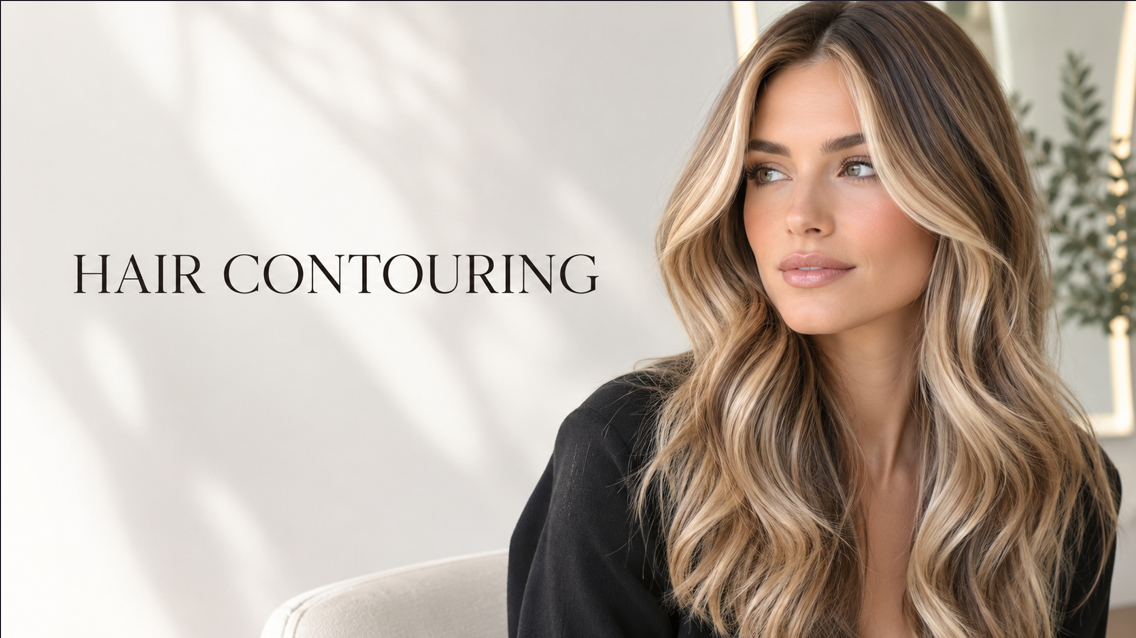
You already know contouring from makeup. A touch of shadow along the jaw, a sweep of light across the cheekbones, and suddenly your whole face looks more sculpted without a single feature actually changing shape.
Hair colourists have quietly been doing the same thing with foils, balayage, and careful placement for years. It's called hair contouring, and it has become a popular colour technique in salons because it works with your actual bone structure rather than simply adding brightness for the sake of it.
If you've ever left a salon loving your colour in the mirror but wondering why it never quite photographs the way you hoped, understanding how hair contouring works will probably explain why.
What Is Hair Contouring and How Does It Work?
Hair contouring is the practice of placing lighter and darker tones around your face with intention, rather than colouring your hair evenly from root to tip.
Light draws attention forward and brightens whatever sits closest to it, while depth does the opposite and quietly recedes into the background. Used together, these two effects create the same shadow-and-highlight relationship a makeup artist relies on with a contour stick, except this version doesn't come off when you wash your face at night.
Most of the visible effect happens in the pieces closest to your hairline and cheeks, which is why you'll often hear this called face-framing hair colour. Those particular strands sit directly against your skin and catch the light every time you talk, laugh, or turn your head, so even a small amount of contrast in that zone can change how your whole face reads.
It's a small, precise adjustment with a surprisingly large visual payoff, which is part of why the technique has held its place in salons rather than fading as a passing trend.
Hair Contouring vs Face Framing Highlights vs Face Framing Balayage
These three terms get used interchangeably online, which is exactly why so many people ask for one and walk out with another. They're related, but they're not the same thing, and knowing the difference makes it far easier to ask for what you actually want.
Highlights and balayage describe application methods, meaning they explain how the colour physically goes onto your hair. Contouring is closer to a strategy, describing why the colour goes exactly where it does. A stylist can use foiled highlights, hand-painted balayage, or a mix of both to build a contoured result. The technique is simply the tool, not the effect itself.
|
Technique |
What It Actually Does |
Best For |
|
Face Framing Highlights |
Foiled, precise lightening on the sections nearest your face |
A crisp, noticeable brightness boost without touching your whole head |
|
Face Framing Balayage |
Hand-painted, graduated lightness that fades naturally into your base colour |
Softer, lower-maintenance dimension around the face |
|
Hair Contouring |
Combines light and dark placement with intent, using either method above |
Reshaping how your face reads, not simply adding brightness |
If you're considering a colour change, it's worth looking at the full range of customised hair colour services available at Artistic Visions. The salon's colour services include customised toners, root, global and vivid colours, as well as foils and on-scalp bleach.
Once you separate how the colour is applied from why it's placed where it does, the whole conversation with your stylist gets simpler. Instead of pointing at a photo and hoping the result translates to your face, you can describe the actual effect you're after and let them choose the technique that gets you there.
Hair Contouring for Different Face Shapes: Where Should Colour Go?
Once you know your face shape, colour placement stops being guesswork and becomes a formula your stylist can actually build a plan around. A quick way to check your own shape is to pull your hair back and compare the width of your forehead, cheekbones, and jaw in the mirror.
Hair Contouring for a Round Face
If your face is roughly as wide as it is long with fuller cheeks, the general goal is added length. Brightness placed just below cheekbone level and carried through to the ends draws the eye downward, while a touch of depth kept close to the roots and sides stops things from looking wider than they actually are.
Longer layers around the face tend to support this effect, since shorter, blunt pieces can add width exactly where you're trying to reduce it.
Hair Contouring for an Oval Face
An oval shape is already close to balanced, so contouring here is less about correcting proportions and more about highlighting whichever feature you want noticed, whether that's your cheekbones, your eyes, or your jawline.
Because there's less to counterbalance, this shape can experiment fairly freely with dimension near the part or through the ends.
Hair Contouring for a Square Face
A strong jaw paired with a forehead of similar width usually benefits from softening rather than sharpening further. Light placed at the temples and along the jawline, kept diffused rather than crisp, blurs the corners instead of framing them more sharply.
Highlights that start slightly above the jaw rather than directly on it tend to soften a square shape more effectively than pieces placed right at the angle itself.
Hair Contouring for a Heart-Shaped Face
Wider through the forehead and narrower toward the chin, a heart-shaped face tends to look more balanced when the top section stays slightly deeper and lightness is introduced lower down, near the jaw and through the ends.
This brings visual width down toward the narrower chin rather than emphasising the broader forehead above it.
Hair Contouring for a Long or Oblong Face
When your face is noticeably longer than it is wide, the aim shifts toward adding width rather than length. Placing brightness horizontally across cheekbone level works better here than concentrating all the lightness through the ends, since vertical placement alone can end up elongating an already long face further.
Why Hair Contouring Starts With a Proper Colour Consultation
Two people can have exactly the same face shape and still need completely different placement, because face shape is only one part of a much bigger picture. Your natural colour, how much contrast your hair can realistically handle, how often you're willing to sit in a salon chair, and how your hair behaves day to day between appointments all matter just as much.
Skin tone plays a bigger role here than most people realise, too. Warmer undertones generally sit well with honey, caramel, and golden blonde placement, since these tones echo the warmth already in the skin rather than fighting against it. Cooler undertones tend to suit ash, champagne, or softer beige placement instead, which keeps the contrast looking intentional rather than brassy.
The exact same placement can look completely different on two people with identical face shapes if their undertones don't match the formula used.
This is exactly why a hair colour consultation isn't a box-ticking exercise before the real appointment begins. It's the part where a stylist works out what's actually achievable for your hair, rather than what looked good in a photo you saved months ago.
A proper consultation looks at your face shape, your hair's condition and history, your undertone, and your lifestyle before a single foil goes anywhere near your head. It's also where personalised hair colour stops being a phrase on a website and starts meaning something specific to you.
That consultation-first approach also reflects how Artistic Visions describes its own process. The salon says appointments begin by understanding your hair goals, lifestyle and inspiration, before creating a personalised plan around colour placement, hair health and maintenance.
If you're considering a colour change, you can explore Artistic Visions' hair and colour services to see how the salon approaches customised colour and blonding.
How Long Does Hair Contouring Last and How Do You Maintain It?
Most contoured colour holds its shape for somewhere between two and four months, depending on how much contrast was used and how quickly your natural colour grows through underneath it.
Root shadowing and softer, blended placement tend to stretch that window further than high-contrast pieces, simply because the regrowth line is less obvious as it comes through.
At home, a sulphate-free shampoo, a heat protectant before any styling tools, and the occasional toning treatment go a long way toward keeping the effect looking intentional rather than grown out and patchy. Toner especially matters for lighter placement, since even beautifully placed highlights can shift warmer over a few weeks without it.
What Should You Ask Your Stylist About Hair ?
If you want to walk into yourContouring next appointment prepared, keep it simple.
-
Bring one or two reference photos and explain what you like about the colour or placement.
- Mention the specific feature you'd like softened or brought forward, whether that's your jawline, cheekbones, or forehead width.
- Ask directly whether highlights, balayage, or a fuller contour placement suits your hair and your goals.
- Say how much upkeep you're realistically willing to commit to between appointments.
That last point matters more than people expect. The best placement on paper isn't much use if it needs more maintenance than your actual schedule allows.
Ready to Create a Hair Colour That Works With Your Face?
At Artistic Visions, the process starts with a conversation about your hair, your goals and the look you want to create. From there, your stylist can work through colour placement, hair health and maintenance to build a plan that suits you.
If you're curious about what hair contouring could look like on your features, explore the salon's colour services, then book your consultation with the Artistic Visions team in East Perth.
FAQs
Does Hair Contouring Work If I Already Have Grey Coming Through?
Yes. Grey tends to reflect light differently to the rest of your hair, so your stylist will usually adjust placement slightly to blend it in rather than fight against it.
Does Hair Contouring Suit Curly or Textured Hair?
Yes. Curl pattern changes how light bounces off each strand, so placement is often adjusted to sit slightly differently than it would on straight hair, but the underlying idea of shadow and light still applies.
Is Hair Contouring More Expensive Than Regular Highlights?
It depends on how much placement and blending your hair needs rather than the technique itself. Your stylist can give you an accurate price and timeframe once they've seen your hair in person.
Can I Get Hair Contouring If My Hair Has Never Been Coloured Before?
Absolutely. Virgin hair often takes tone more evenly, which can actually make first-time contouring placement more predictable.